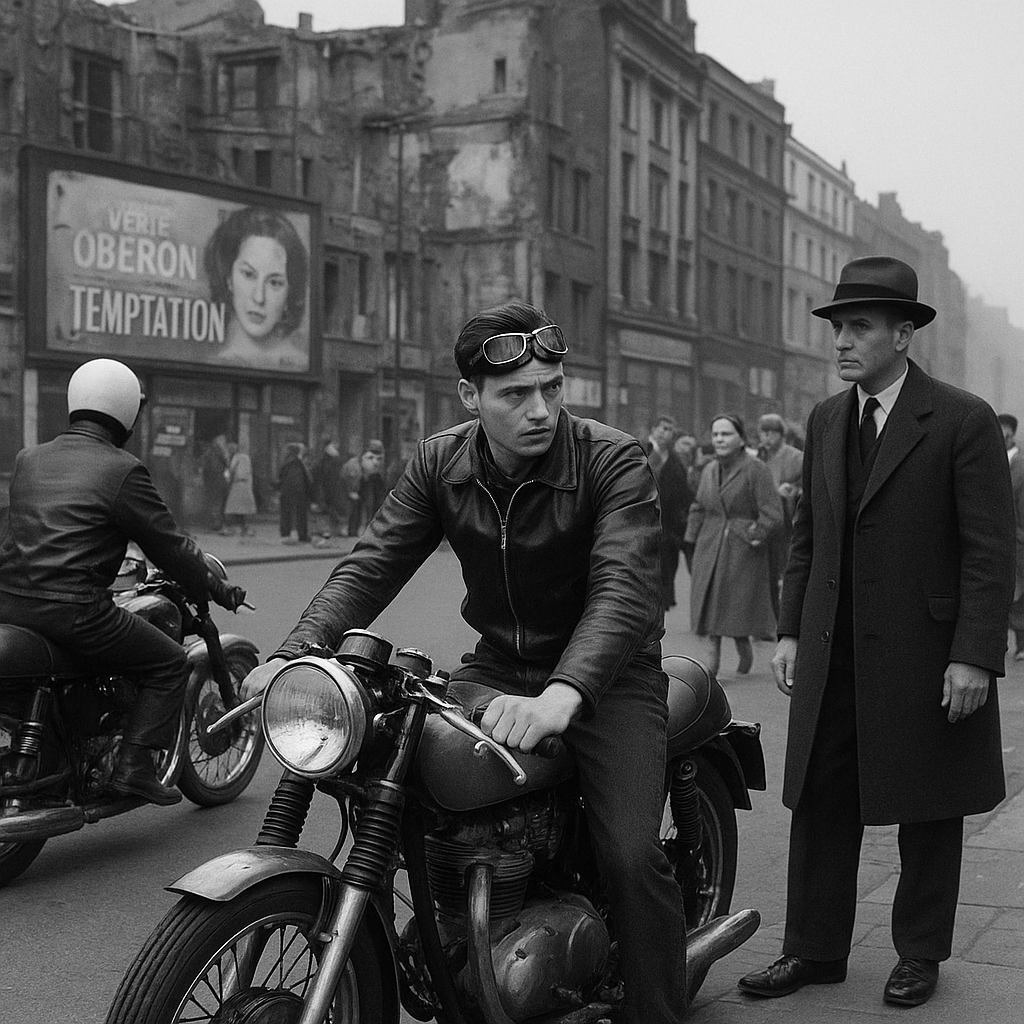
There are motorcycles, and then there are café racers. They’re not just impractical bikes, they’re lean, stripped-back hooligans built to look fast even when they’re parked outside your local café. Their story kicks off in the smoggy streets of 1950s Britain, where a bunch of young rebels decided that factory bikes were too heavy, too slow, and far too polite.
Cars were expensive, jobs were dull, and what better way to stick two fingers up at the grey, post-war grind than to thrash your hacked-up Triumph or Norton between cafés, jukebox blaring rock ’n’ roll, daring your mates to hit the ton (100 mph = 160kmh) before the song finished. Comfort? Not important! These old slugs were modified for speed, swagger, and showing off.
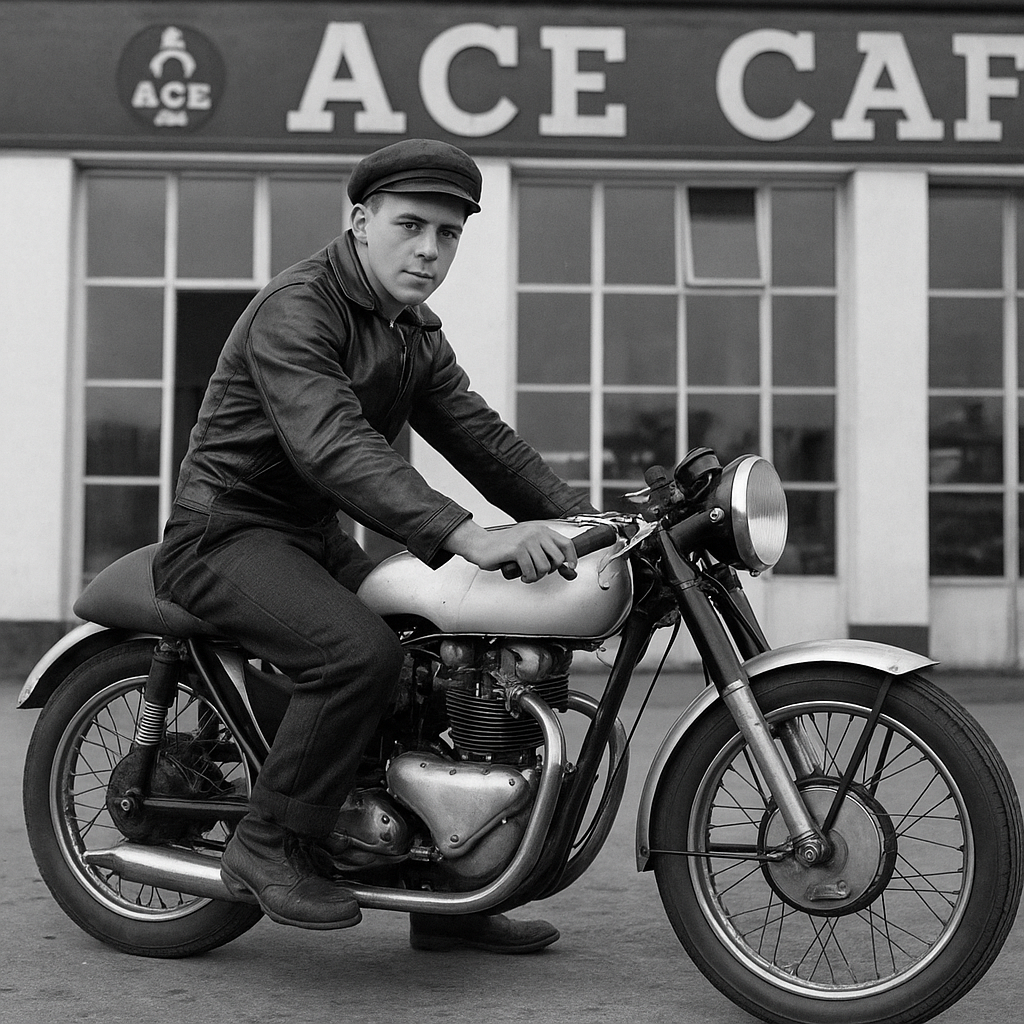
It was the golden age of the ‘ton-up’ boys and girls, leather jackets, greasy spoons (a cheap run down café or restaurant serving fried foods), and the infamous Ace Café meeting spot. The formula was simple: long fuel tanks you could tuck behind, clip-on bars to stretch you flat, rearsets to jack your legs back, and just enough stripped weight to make the engine howl. They were loud, raw, and full of attitude like the youth that built them.
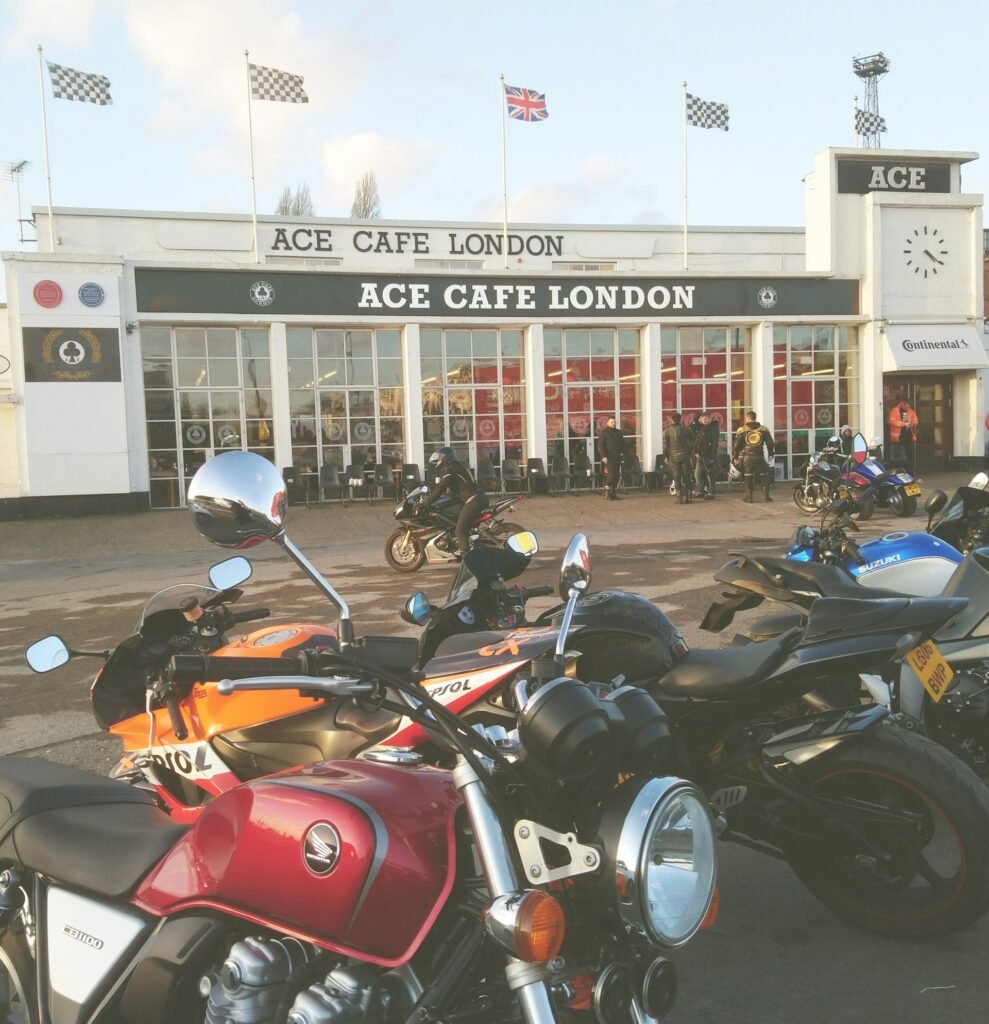
But, by the late 1960’s, the roar had started to fade. Japanese bikes were rolling in, shiny and reliable straight out of the box, and suddenly you didn’t need to spend every weekend wrenching in a shed to go fast. Rockers grew up, music changed, and the café racer slipped into past, kept alive only by diehards and dusty old photos of leather-clad kids smoking outside the Ace.
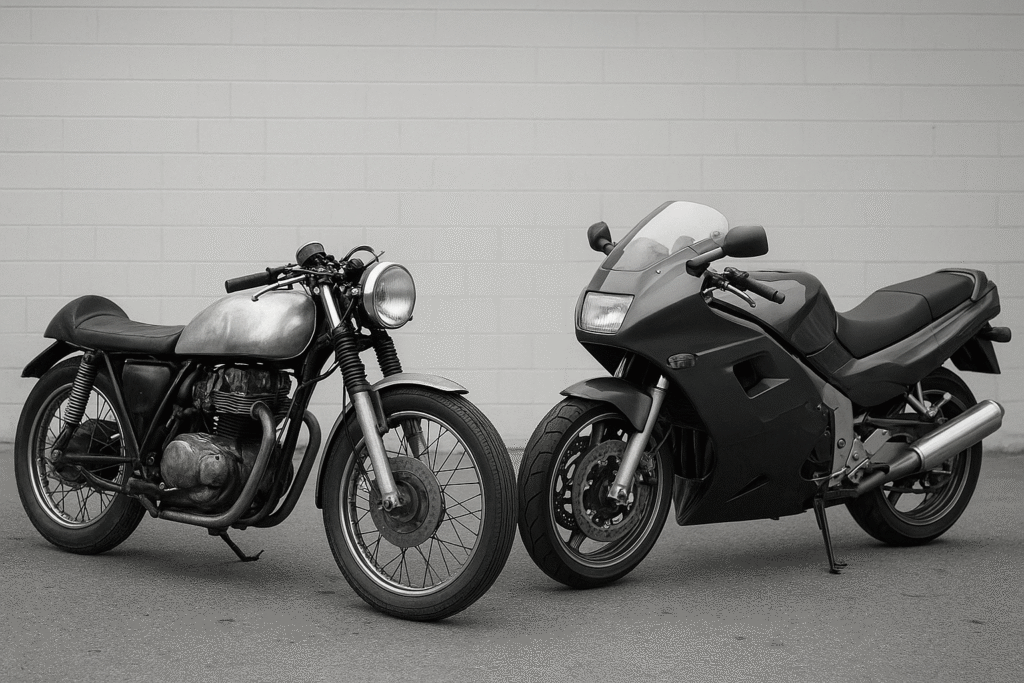
Then the nineties and 2000’s rolled around, and like any good cult classic, the café racer made a comeback. This time it wasn’t just greasy garages in London but cool custom shops from Sydney to Copenhagen to Taipei. Builders like ‘Deus Ex Machina’, ‘Wrenchmonkees’, and ‘Rough Crafts’ reimagined the old style with new engines, new tech, and a dash of design flair. The internet did the rest and suddenly café racers were global again, not just retro throwbacks but a movement. And the manufacturers weren’t about to miss the party: Triumph dropped the gorgeous and ever popular ‘Thruxton’, Ducati gave us the ‘SportClassic’, and Royal Enfield dusted off its history books to churn out modern classics that looked like they’d been pulled straight from the Ace.
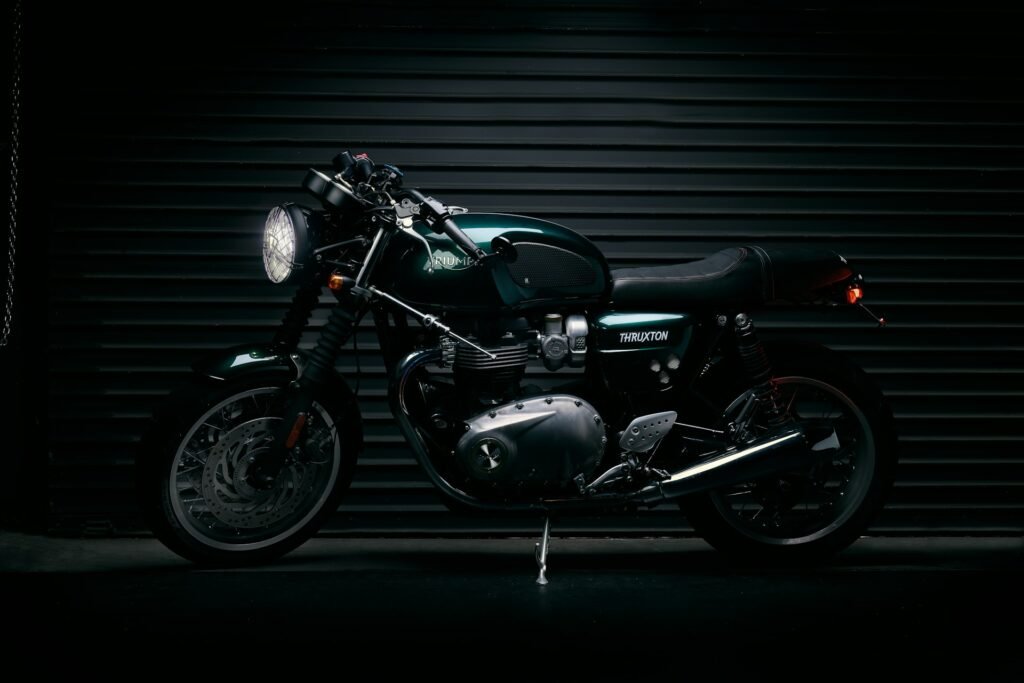
So why do they still matter? Because café racers are motorcycling at its most stripped-down and sexy. They’re about attitude and personal style first, practicality and specs second. They’re bikes you build as much as you buy, each one a rolling middle finger to conformity and the dullness of daily life. They’re light, nimble, and perfect for slicing through city streets with a grin under your visor. Sure, they’ll rattle your spine, cramp your wrists, and deafen you on the motorway, but that’s missing the point. Café racers were never built for comfort, they were built for mischief and pure fun.
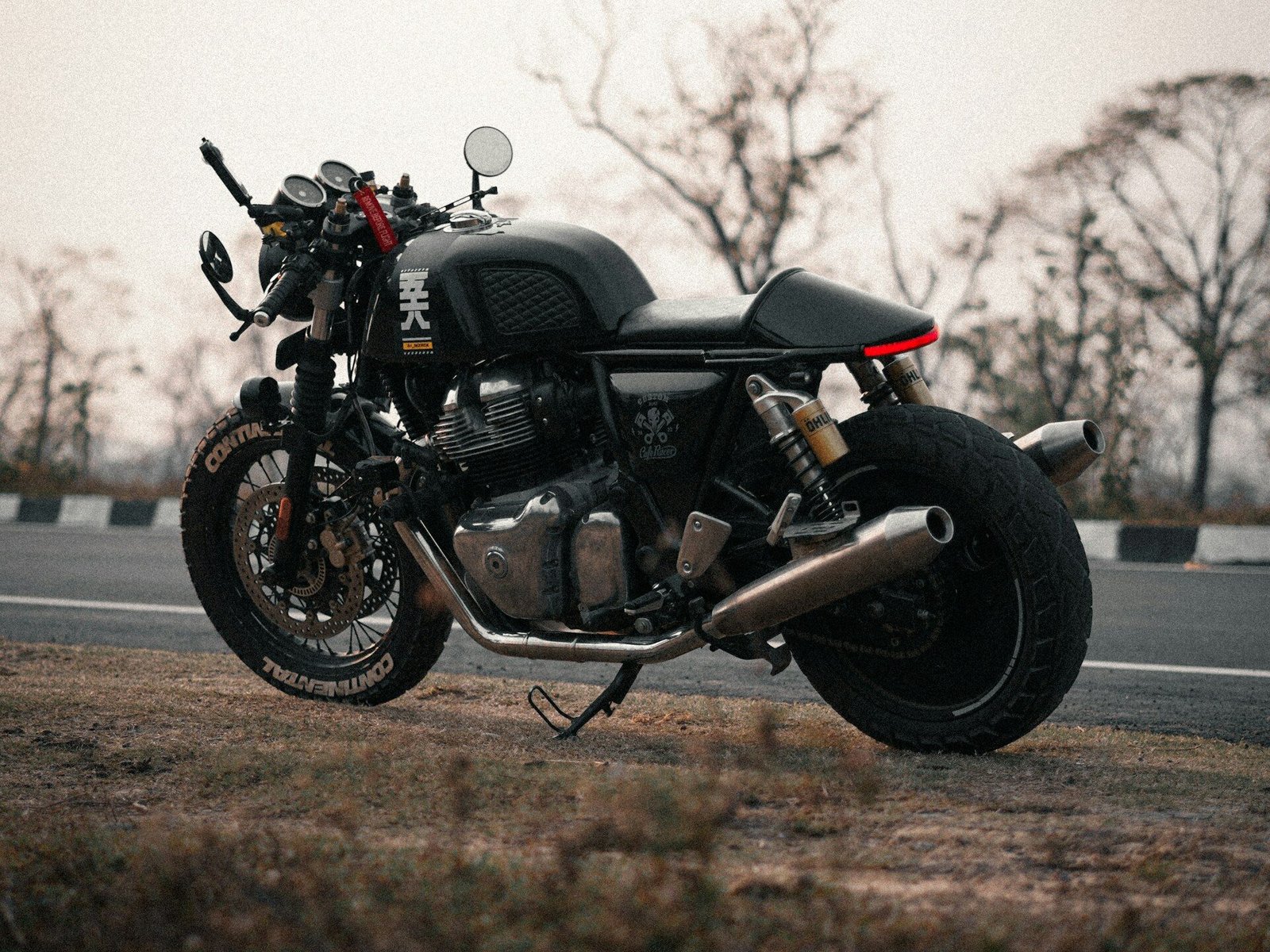
Today the scene is alive and buzzing again. From backyard tinkerers hacking up old Hondas, to big-name builders unveiling customs that belong in galleries, café racers are once more stealing the limelight. They’ve got history, culture, and just the right amount of bad manners to keep them interesting. To ride one is to be part of a legacy that grew from end of one of the worst parts of human history, and to carry that new freedom spirit into the modern world. They remind us that motorcycling isn’t just about transport, it’s about rebellion, freedom, and looking damn good while you chase it.
Check out the articles on “Choosing Between a Modern and a Classic Café Racer” or “Why do Café Racers put Crosses on their Front Headlights?”