Choosing between a modern café racer and a classic one is a bit like choosing between a vintage vinyl and Spotify. Both give you music, both can hit you right in the feels, but the experience is wildly different.
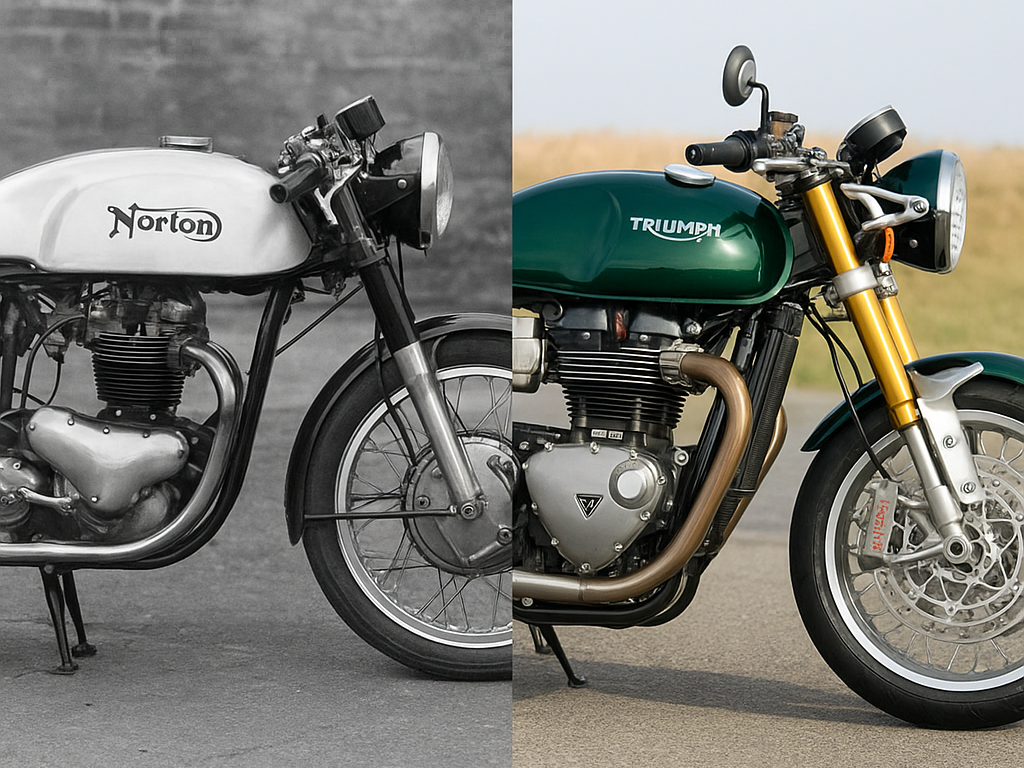
Café racers were born in the 1950s and 60s, back when young rebels stripped down their bikes to the bare essentials, slapped on clip-ons, rearsets, and a loud exhaust, then raced from café to café trying to hit that magic “ton” (100 mph). Those old bikes oozed character. They rattled, they leaked, they demanded that you loved them enough to put up with their nonsense. But in return, they made you feel like you were part of something raw and rebellious, a scene where speed, style, and a bit of swagger came before comfort or convenience.
A classic café racer today is basically a ticket straight back into that world. If you pick up an old Triumph Bonneville, Norton, BSA, or a Honda CB from the 70s and build it out into a racer, you’re buying into the imperfections as much as the ride. They vibrate, they can be temperamental, and they’ll need regular attention from your spanners. But when you fire it up and it coughs to life, it’s pure mechanical soul. People turn their heads, not because it’s shiny or new, but because it’s dripping with history and looks like it belongs in a black-and-white photo outside the Ace Café. Riding one is visceral. The handling is heavier, the braking is sketchy compared to modern standards, but that’s what makes every corner and every throttle twist feel alive. If you want authenticity and don’t mind the occasional oil leak on your garage floor, a classic will reward you tenfold.
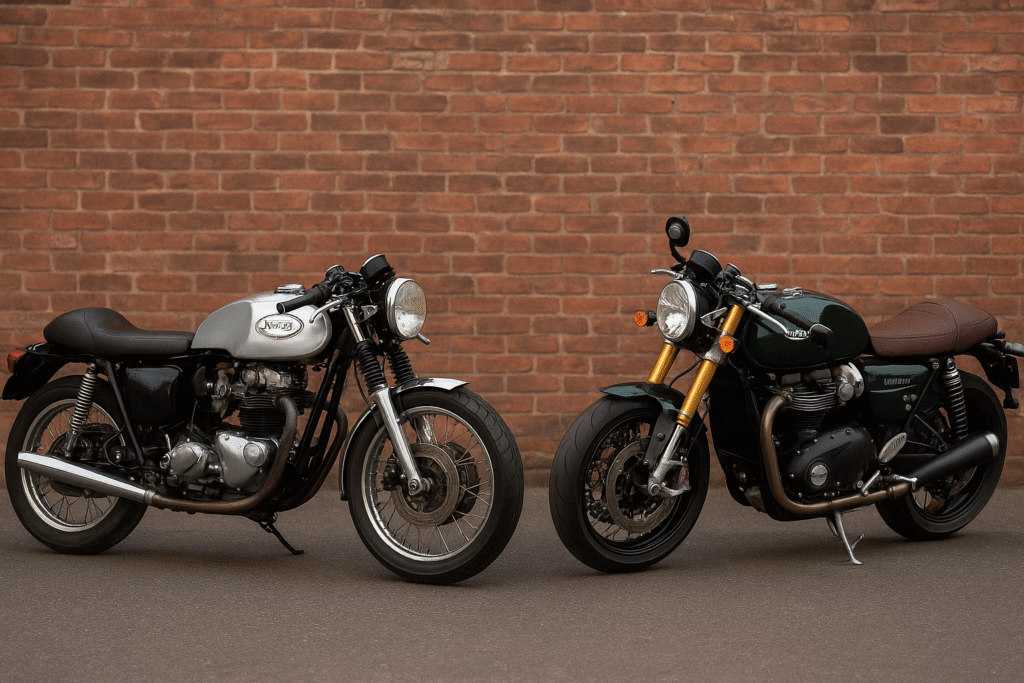
On the flip side, modern café racers are the new kids paying homage to the old guard. Brands like Ducati with the Scrambler Café Racer, Triumph with the Thruxton, or Royal Enfield with the Continental GT are building bikes that look the part but pack in all the conveniences of modern engineering. You get fuel injection instead of fiddly carbs, ABS brakes that stop you without a prayer, suspension that won’t throw you across the tarmac, and electrics that actually work in the rain. A modern café racer still gives you the style — the low bars, the slim tank, the racer silhouette — but with reliability and performance you can trust every day. You can jump on one in the morning, ride it to work, hit a back road blast in the evening, and not worry that you’ll spend half the weekend fixing it. They’re the café racer vibe, distilled for riders who want the look and spirit without the grease under their nails.
So, which is the better choice? That depends on what you’re chasing. If you want to relive the spirit of the rockers, smell the petrol, and feel every bit of imperfection as part of the ride, go classic. It’s romantic, it’s raw, and it connects you to a time when speed was rebellion and style was half the point. But if you’re more into the idea of having a bike that can keep up with traffic, stop on a dime, and won’t strand you when you just wanted a coffee run, then modern is the smarter choice. In truth, neither is wrong. One is heart over head, the other is head over heart. Both deliver that café racer essence: stripped-down bikes that look fast standing still, and make you feel like part of something bigger every time you swing a leg over.
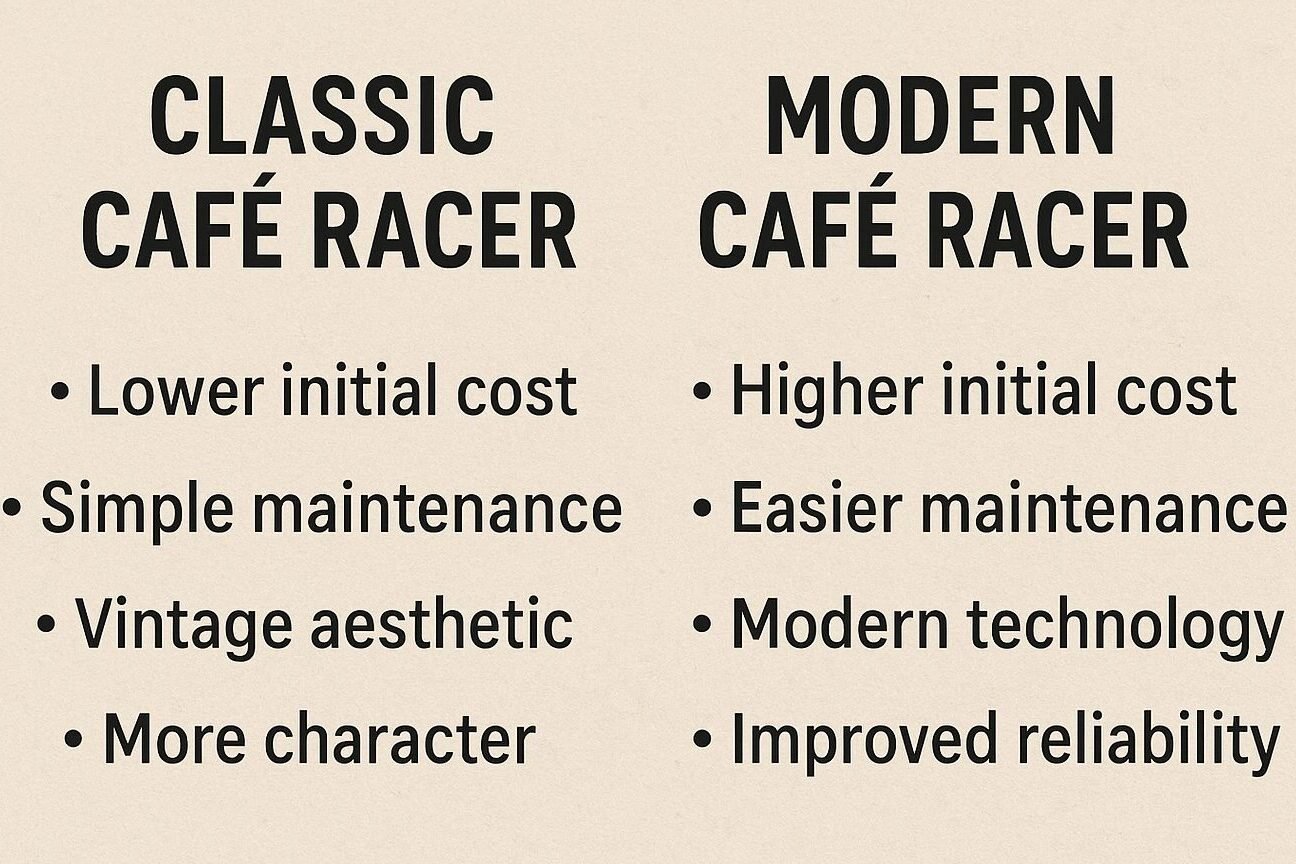
At the end of the day, café racers have never been about practicality. They’re about identity, about telling the world you’d rather ride something with character than blend in with a sea of plastic fairings. Whether you pick a classic that smells of oil and rebellion, or a modern machine that fuses retro looks with everyday rideability, you’re buying into the same idea: style, speed, and a little bit of mischief. And honestly, whichever way you lean, you’ll still look cooler outside the café than anyone on a scooter.