There’s a new sound in the world of motorbikes, and it’s not the raspy roar of a Ducati or the deep rumble of a Harley. It’s quieter. Cleaner. Maybe even a little unsettling to those of us who were raised on petrol fumes and clutches. It’s the low hum of electric power, and whether we like it or not, the scene is getting louder.
So, is it time to consider going hybrid or electric?
The motorcycle world is changing fast. Governments are tightening emissions regulations, cities are banning combustion engines from their streets, and manufacturers are pivoting toward cleaner tech. But the question isn’t just about regulations or saving the planet. It’s about how you want to ride, what you value, and where the true joy of motorcycling comes from.
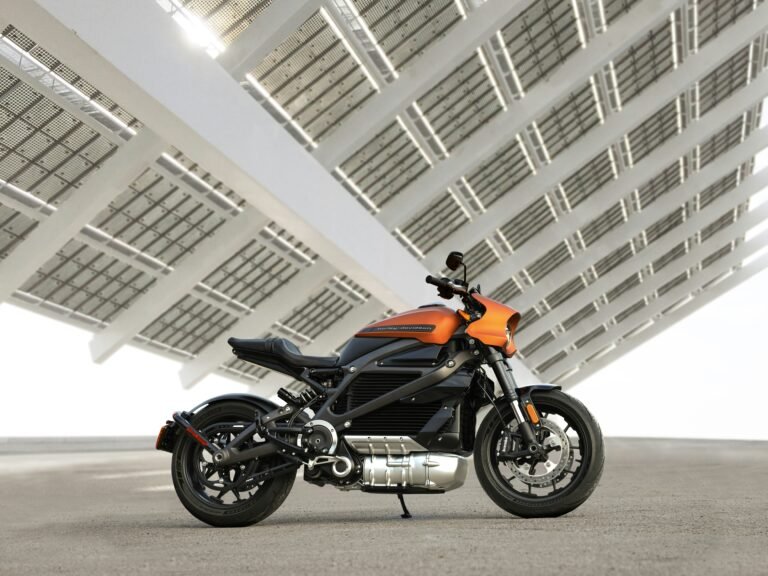
Electric motorbikes are no longer just futuristic gadgets from sci-fi movies. They’re here, and they’re impressive. Brands like Zero, Energica, and Harley-Davidson have created machines that are genuinely fast, smooth, and sexy. The acceleration on an electric bike is immediate and addictive. There’s no lag, no gears, just twist and go. Maintenance? Almost non-existent. No oil changes, no valve checks, no exhausts to rust. And let’s not forget the cost of running one; charging your battery is far cheaper than filling up your tank, especially with fuel prices doing their usual acrobatics.
There’s also the matter of tax breaks and financial incentives. Depending on where you live, you could get rebates, pay less road tax, or be exempt from congestion charges altogether. From an eco and economic standpoint, it’s pretty hard to argue against the appeal of electric.
But it’s not all roses and renewable energy. The biggest gripe is still range. While some premium electric bikes can push past 200 km on a single charge, many still fall short of what traditional petrol bikes can do. And charging takes time, especially if you’re not near a fast charger. Touring long distances or riding in remote areas? You’ll have to plan carefully, or keep that anxiety dialed in alongside your speedometer.
Then there’s the ‘feel’, or the lack of it, according to the purists. No gears, no engine growl, no clutch to feather through a hairpin. For many riders, that mechanical connection is the soul of the machine, and electric can feel… lifeless. Like playing an acoustic gig through a laptop speaker.
Hybrid motorcycles, on the other hand, are the middle child trying to get noticed. They haven’t taken off in the same way hybrid cars have, mostly because the tech is trickier to package on two wheels. But they offer an interesting compromise. You get the lower emissions and fuel savings of electric, with the backup and range of a combustion engine. Some hybrids can switch seamlessly between power sources, making them efficient, flexible, and a little more reassuring than full-electric.
The downside? Limited options for now. Very few hybrids are on the market, and most are scooters or city-focused rides. Kawasaki appears to be leading the charge for hybrid motorcycles, and when the demand rises, expect a flood of new models from all the big manufacturers.
And then, of course, we have the good ol’ internal combustion engine. Dinosaur powered bikes are still the dominant force on the road, and for good reason. They’re fast, familiar, cheap to buy (in most cases), and easy to fuel up. Whether you’re gunning it on a mountain pass, thumping through backcountry roads, or just heading to work with a smile, there’s something deeply satisfying about doing it with pistons firing beneath you.
The refueling process takes minutes, not hours. Mechanics know how to work on them. Parts are everywhere. And when you open that throttle and hear the engine scream, you’re reminded why you fell in love with motorbikes in the first place.
But even this corner of the moto world is feeling the squeeze. Emissions rules are getting stricter. Petrol prices are rising. Some cities are starting to ban combustion bikes altogether, or at the very least, slap them with extra taxes and tolls. Whether you like it or not, the writing’s on the wall, and the future might not be filled with fumes.
So, where does that leave you? If you’re mostly riding around town, doing short commutes or weekend café hops, an electric bike might make more sense than ever. You’ll save money, skip the oil changes, and you can still shift through rush hour traffic. If you’re eco-conscious, but not quite ready to say goodbye to petrol, keep your eye on the hybrid market. Like most new concepts, it hasnt been the most popular option yet, but it might just hit the sweet spot in the next few years. And if you live for long-distance rides, big engine character, and good old-fashioned mechanical magic? Then stick with what you love, but be aware that times are changing, and the roads (and rules) around you are too.
I would say that if you live and stay in a city, electric is the go to. If you mainly commute to work but love a small trip on the weekend, hybrid is the go to(and going forward will become the most exciting option overall!). But if you can handle the costs, maintenance and noise, then… for now, go grab yourself a combustion bike and enjoy the full feeling of man and machine.
At the end of the day though, there’s no wrong answer. Better is a perspective and whether that comes from a whisper-quiet battery pack or the thunder of cylinders, that’s entirely up to you!
See below for a more in-depth on the pros and cons of each.
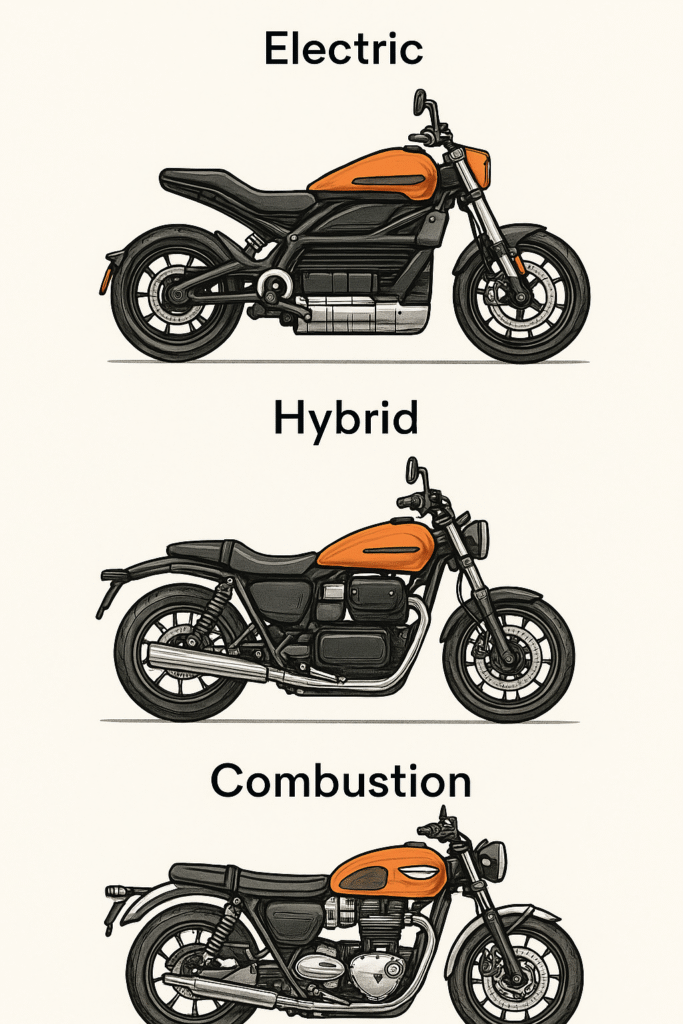
Electric has the benefit of less moving parts , including gearbox, chain, engine and fuel. So less maintenance and weight (however batteries and the motors are quite heavy). They don’t need a fuel tank, or an exhaust so you can usually store more and you have no risk of getting burnt from a scalding hot pipe. Instant electric torque means instant acceleration, but that huge amount of energy transfer drains the batteries really quickly. Security is really good because you can take most batteries out to charge, which makes them hard to steal. There are no gears, so no clutch and therefore brakes can be at your hands for better feel. They are always ready so no need to warm it up or wait for the choke to flick off. They are generally pretty cheap but range is not that impressive, and with more range comes more batteries and weight. Lack of noise is great for moving around neighbourhoods in the early morning or late at night. I still feel that not being able to be heard by other road users or pedestrians is quite dangerous. One thing most people forget, no engine braking. So it feels a bit odd at first and brakes will need to be replaced more often like in most automatic vehicles. Yearly costs however, should be cheaper due to maintenance, insurance, fuel/charge, government rebates and emissions taxes.
Hybrid’s should really be the best of both world’s. The blend of electric acceleration and efficiency with the range and spirit of a combustion bike. Yet, the extra weight in having two motors is noticeable. Because there is still a normal engine and transmission and fuel tank, the battery system lives alot higher up. This has a dramatic impact on the cornering and overall fell of the bike. This is slightly compensated by having a smaller combustion engine that combined will make equivalent power to a much larger cc bike (but only in bursts to not overheat the battery system). The fuel economy is obviously increased, especially in the city and stop/start situations thanks to not having a starter motor. These bike’s should still look and sound like an ‘combustion bike’ at speed but with an electric boost and the ability to run in full electric mode at lower speeds. There’s no need for a clutch and potentially no need for a gear shifter in future models. You can still can get a nice burn from the hot parts like the exhaust and engine. Servicing is a bit more complex but mostly the same as normal motorbike in; oil changes, filters, worn parts and adjustments. You still have to fuel up, but less often and you shouldn’t need to charge the battery thanks to the alternator filling up while you ride. Reliability should be fantastic like most other hybrid cars on the road, but in saying that, this is the first generation of hybrids motorbikes so only time will tell. Upfront costs for these bikes are quite high (unsurprisingly as it’s new tech). Incentives like reduced fuel costs, longer range and emissions savings rebates should cover those costs.
Combustion engines are really hard to knock for their overall character and feel. They,ve been perfected over year and have become incredible reliable. But with new tech, their range is their only real theoretical advantage (and possibly that they handle temperature/weather differences better than an electric batteries). The low upfront cost is still a big benefit, thanks mostly to the vast choices available. Fuel prices are always rising and a concern while wars are happening more frequently. Really, we are at the end of an era, or the start depending on how you feel. Electric will soon completely take over as companies find new ways to make batteries lighter, smaller and with increased capacity. The benefits of electric outperform combustion in almost every area from carrying cargo, instant torque, potential top speed, acceleration, ongoing costs, physical size and their environmental impact. My tip, enjoy combustion and changing gears while it lasts and expect a very quiet, less raspy future.